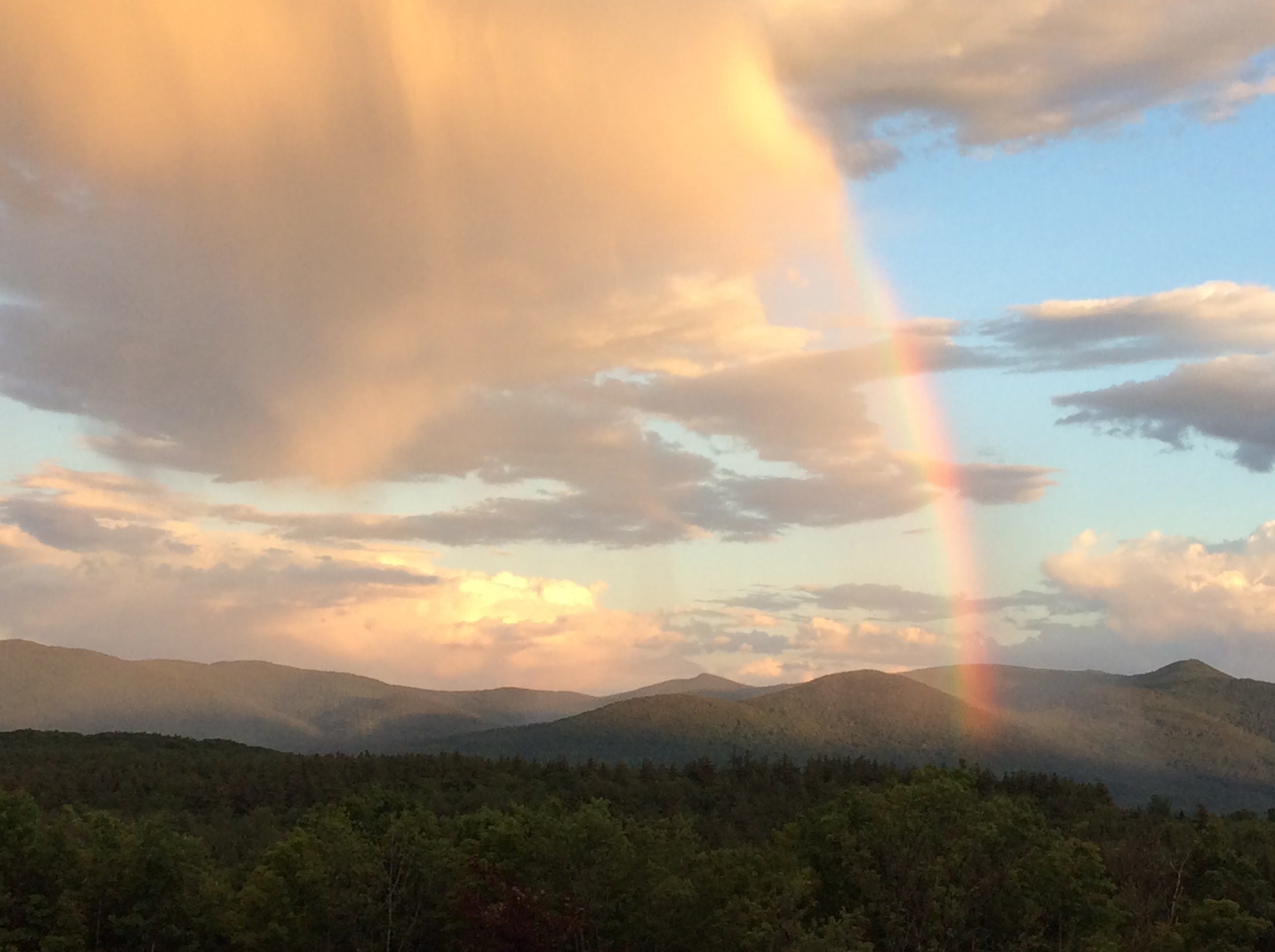
What is perfection?
Is there such a thing?
I’ve been talking about making cartoons for a long time, and dawdling. I still have a lot to work out with myself around art-making. I am a perfectionist. Not so much with writing. For me, writing is a murky quest. A walk through a dark forest searching for little gleams of light.
It’s a jigsaw puzzle without a finished picture to go by. Stabs in the dark, trial and error, intuition, logic, and if at all possible, humor. I always aspire to humor.
When I send a piece of writing out into the world I have no idea of its worth or how it will be received. Not knowing how something will be received is true of all art. How could it be otherwise? You just have to do it. Attempting to elicit a particular response is called advertising.
Why is cartooning different than writing for me?
On the one hand, same, you just have to do it. Yet with cartooning I have a different relationship, as I do with all visual images I make. They have to have a certain rightness, a certain visual integrity that I can perceive, or I find them to be wrong. The act of making an image is searching for, or allowing, intuiting, that integrity.
What is particular to cartooning is not only that many cartoons combine words and pictures, it is that the art, the drawing itself, is also a language which requires rules and consistency to find its power.
This is especially true for cartoons with ongoing characters. If I do not understand what they look like physically and how they behave according to their personalities, it is impossible for me to come anywhere near the perfection I seek.
As I work on drawings, sometimes a line that is a hair off from where I think it should go misses the mark I am trying for. Luckily, we live in an age in which digital tools make it easier to tweak things than pencils, paper and ink do. There’s only so much you can do with an eraser on paper before you have a mess.
I still use pencil, paper and ink as primary tools, with the option for digital tweaking once I scan my work into the computer. What a relief! If only we had such an easy form of do-overs in life itself.
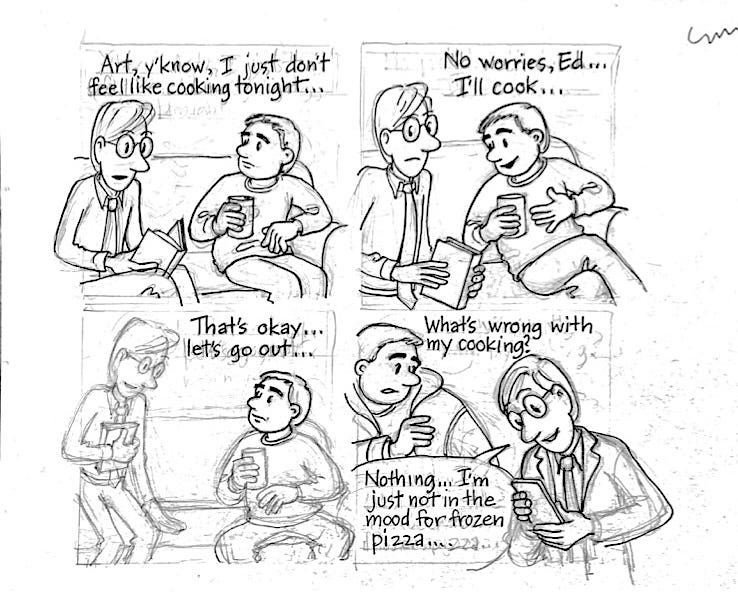
What is this perfection I seek?
The perfection I seek is not based on any external standard (well, in the sense of character consistency, it is an external standard that is entirely internal). When I draw a nose or an eye or a mouth, I recognize that it looks right or wrong for that character depending on its shape, size, and placement in the face.
This knowing has to be internal. And the rightness of shape, size, and placement has to be flexible enough, intuitive enough, to show different positions and emotions.
I start by drawing in pencil as well as I can (based on a rough idea/design), and when I ink over it I don’t follow the lines I have already made exactly. I try to make them better (and sometimes worse). What I’m calling artistic perfection, or as close as I can get, is a gestalt. It’s a moving target that requires an ongoing intuitive assessment and negotiation between the whole and the parts.
Making art is a synthesis of complexity that requires presence. Whatever you just did, whatever stroke you just made, might have affected the whole in such a way that it needs to be tweaked or fixed in the light of new information, aka the present.
I’m talking about this because it’s how we need to approach everything. Yes, we need prior knowledge, rules, systems, structures, and we also need to allow ourselves to be guided by the sparkling light of new information, aka the present.
The perfection that is available to us is the imperfect perfection of being fully present.
I’d rather be here now, so I can make art.