
How to Play the Game
#1: Figure out what game we're playing...
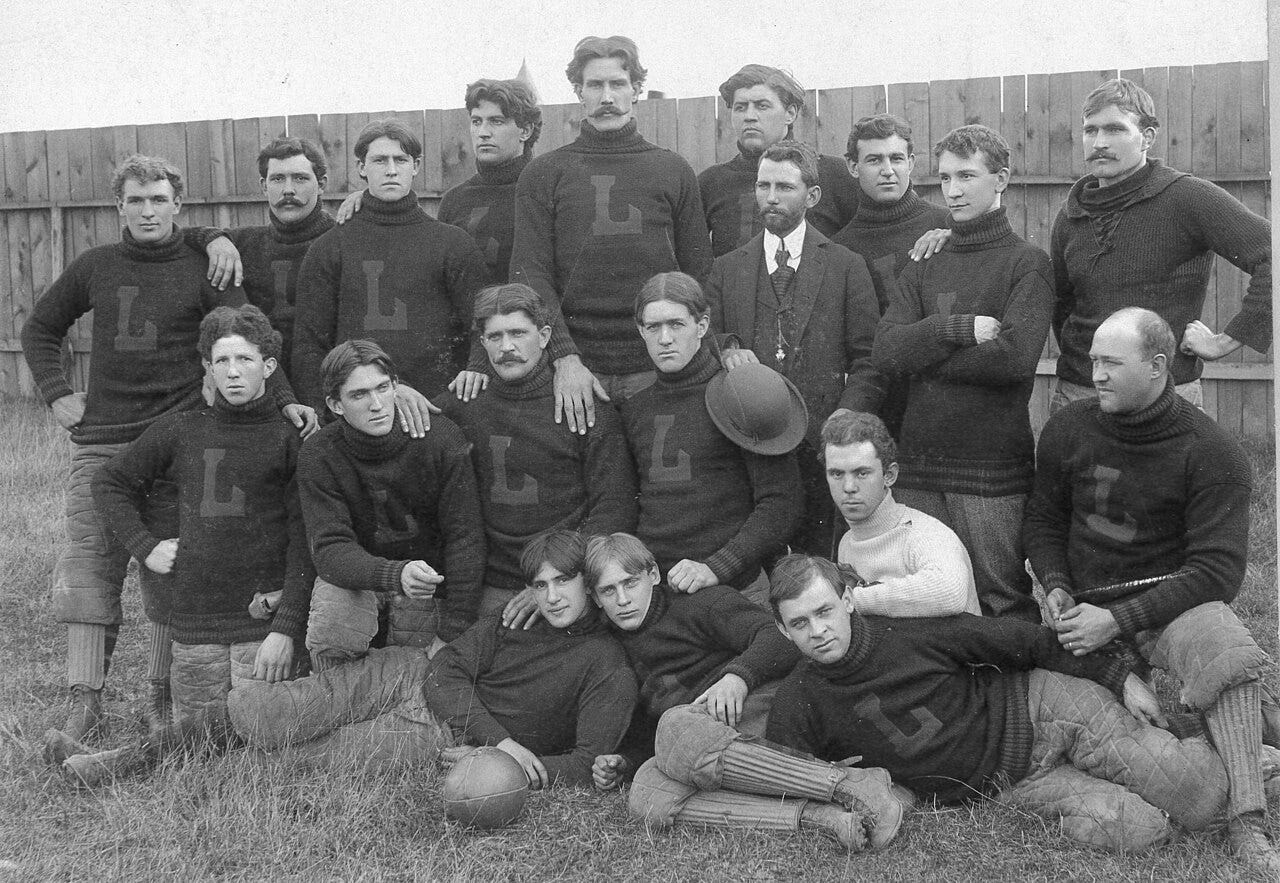
What game are we playing and why does it matter?
Different games have different rules. Some games, like Calvinball and geopolitics, don’t have set agreed-upon rules. Sometimes the game is to pretend there are rules and then do a Lucy (see below). Lucy’s rules, or lack thereof, are different from Charlie Brown’s. They are playing two different games.
The difference between everybody playing by the same rules or everybody playing by their own rules is the difference between football and war. (Although even war has a few rules combatants are supposed to obey…)
Mark Carney’s remarkable speech at Davos on January 20 made this point succinctly. It’s worth reading the whole thing.
For decades, countries like Canada prospered under what we called the rules-based international order. We joined its institutions, we praised its principles, we benefited from its predictability. And because of that we could pursue values-based foreign policies under its protection.
We knew the story of the international rules-based order was partially false. That the strongest would exempt themselves when convenient. That trade rules were enforced asymmetrically. And we knew that international law applied with varying rigour depending on the identity of the accused or the victim.
If you’re interested, here is an astrologer’s take on Carney’s speech and what’s going on right now. Whether or not you think astrology is woo-woo, this has a lot of well-thought-and-expressed ideas.
The astrology of Mark Carney’s speech and the rupture of the world order.
We are in a time now in the United States when what we thought were the rules are no longer necessarily the rules. Let’s put it this way… people who signed on to what we thought we had all agreed to as ‘the system’ did not actually do that. They signed on to their own system, to their Lucy system, the goal of which is to not have to obey any rules they don’t want to obey. To make up their own rules.
And we, we who have been alive for decades, we have trusted that in spite of all the usual sturm und drang—the usual messy hardwired human desire for getting what you want, even if it’s really dumb stuff—the system was strong enough to integrate and neutralize these desires sufficiently well to protect its basic integrity.
And it has been. In spite all the foolishness, greed, corruption, and misguided ideas about what matters, checks and balances have worked pretty well. Oh those founding fathers! They were remarkable.
There is no human-designed system or game that can withstand the will to destroy it, if enough players with enough power want to destroy it. That is an open question at the moment, though my bet is on the percentage of us who don’t want to destroy it, who want to make it better.
People have asked how to play Calvinball. It’s pretty simple: you make up the rules as you go. ~Bill Watterson
What game are we playing?
If life is a game, it is definitely Calvinball. Right now, in the United States, the ping and the pong is between using the traditional ramparts against corruption and the abuse of power, and facing a reality, as Mark Carney is, that this is a new game that requires a different response. It’s not really either/or… it’s a moving target. It’s Calvinball.
What anything looks like depends on how close or far you are to it, and how broad and deep the context is in which you see what you are looking at. There is the immediate wrangling all over the world of who gets the power, who gets the resources, and what they have to do to get it. And underlying this, or perhaps overlaying it, there is a conversation amongst us humans, both philosophical and experiential, about what kind of human organizational systems work best.
Many systems have been tried, and many systems, no matter how good they look on paper, show their flaws when put to the test of human nature. It’s a long, slow uphill slog for our species to grow in wisdom and self-awareness.
Why ‘socialism’ works for the NFL
‘Socialism’ is a word that some people use to express a game that scares them. If what you want is to play a game where you get to make all the rules and the other team has to do what you say, then a word that means fairness or a level playing field will sound scary to you, I guess.
I was fascinated by this article from Thom Hartmann in which he detailed all the ways the NFL is governed by organizational rules intended to create as level a playing field as possible, beyond the actual rules of the game itself.
In other words, the NFL is a regulated market with enforced rules that prevent monopolies, protect labor, and preserve competition. And because of that, small-market teams can win, dynasties don’t last forever, and fans get a fair game. Thom Hartmann, The Hartmann report
“fans get a fair game”
A fair game is a game that’s fun to watch. That’s why it’s fun to watch the Olympics. May the best athlete win. Best in this case doesn’t mean richest and most powerful, it means best in some specific game-like way.
And sure, nothing is ever completely equal or fair in this world. The guy or gal who wins in any category may have better genes and/or better training than their competitors. They may be younger, or older. But we enjoy the competition because we have faith that no direct action has been taken to hamstring one competitor over another. To cheat.
Cheating is only cheating if everybody has agreed to certain rules and then some people break those rules.
What good is a game that is only about power, and requires causing harm to others? What good is a game that can never achieve sustainability because its use of force will always arouse opposition?
That’s what we’re trying to figure out, isn’t it? Is a game that results in profound inequality a good game, even for the winners? Or is there a reason for diversity, equity, and inclusion that arises not from any moral system of thought, but from the deepest underlying natural processes that protect balance and sustainability beyond our power to resist or shape it?
Process is as process does
My great interest in examining process leads me to ponder the use of boundaries, limitations, structures and rules, in art-making, community-making, culture-making and living. It is a dance to make use of limitations, as we must, and also to have the courage and flexibility to see self-imposed and self-constructed rules as the tools they are, and as the god’s truth they are not. And also, to use our self-constructed systems—our games—with a light touch, so that we can see when and where they need to shift in order to meet new and evolving needs and situations.
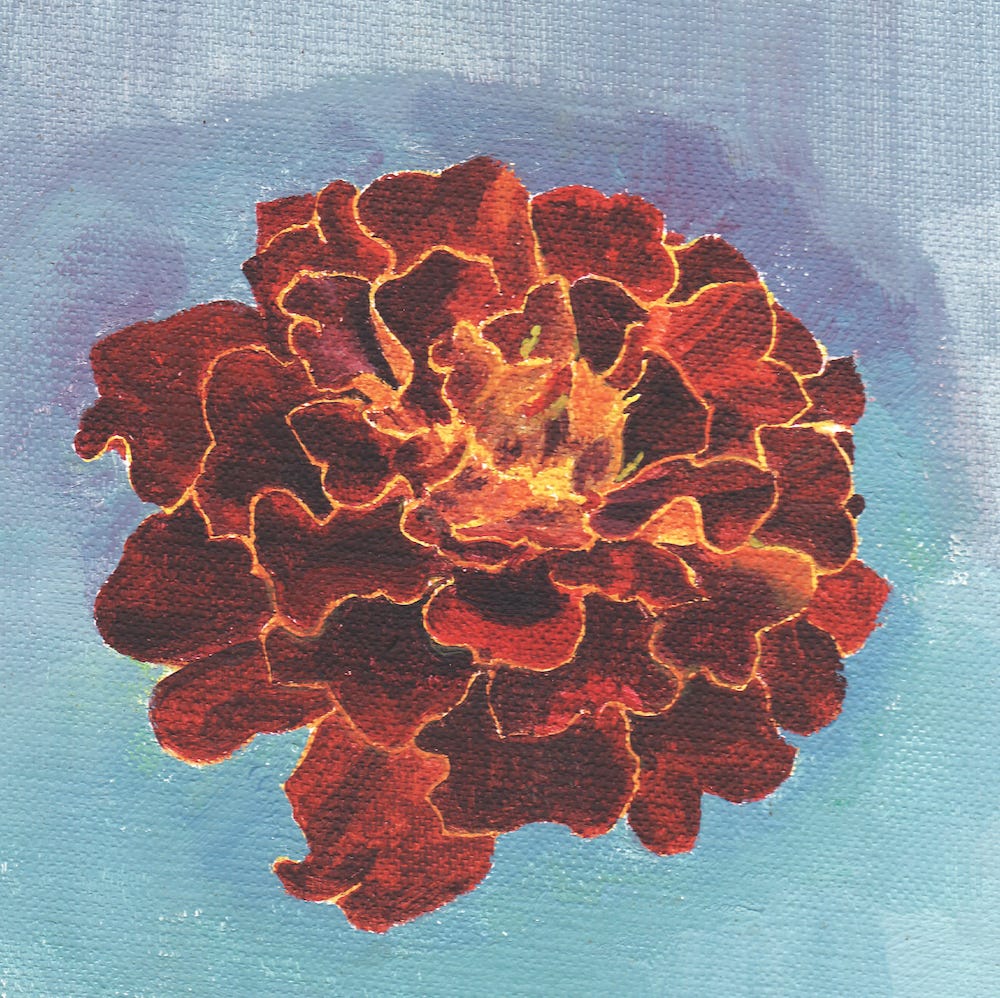
The game I want to play is the one with the greatest amount of space in which to engage in the amazing, delightful, spirit-expanding process of art-making. This process functions best in the absence of fear and dire need. A system/game that provides this environment to as many of us as possible encourages the kind of thinking and creating that solves real problems and inspires and ennobles us.
I must study war and politics so that my children shall be free to study commerce, agriculture and other practicalities, so that their children can study painting, poetry and other fine things. ~John Adams
More great insight so succinctly expressed. Thank you. And I love the picture. Since doing this digital archiving that I do I have captured some fantastic old photo's of great quality. Of all the great ones I have done for different historical societies, etc., my favorite is still one of my father's 1931 school class in Brooklyn, the center of the universe at the time. Below is a link to it that any readers may view. My dad is last one on the right in the first row. But there is a girl in the picture that I instantly fell in love with. Wonder if you can guess. BTW, on some browsers it comes up "fit to screen" first, but clicking on it will bring it up in the full resolution that I scanned it with. https://yourarchivist.com/simpson/simp/a30s/sPS91.jpg