Artifictional intelligence
Can you program heart and soul? Can you program art?
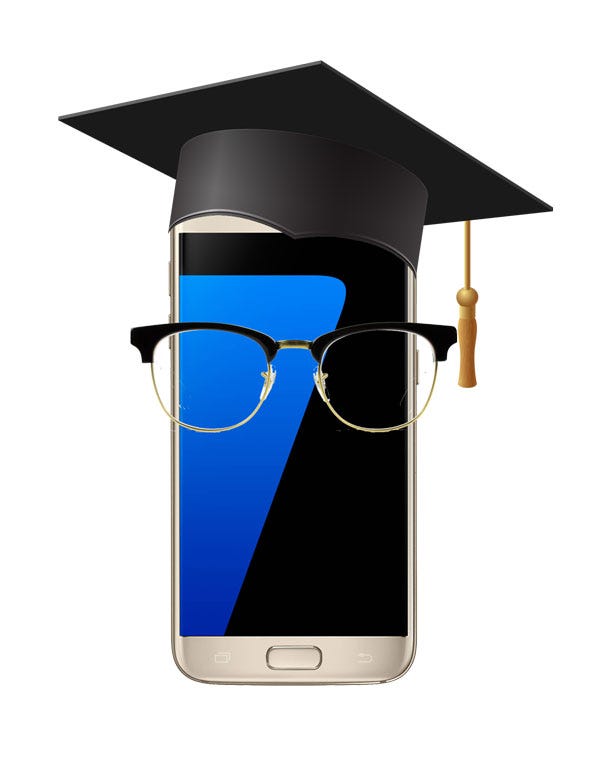
Artifictional Intelligence. That’s my new name for AI. I like it because it clarifies that however intelligent-seeming AI is, what it comes up with is fiction. It might be factually accurate and it’s still fiction in the sense that AI doesn’t know the difference between fact and fiction. Do we? No, of course not. We make stuff up all the time and think it’s real. So what’s the difference between us and it/them?
I’m working on it… Here’s what I’ve come up with so far. I’m going to call what we are capable of, at our best, artifactual intelligence. It’s art based on facts, even though the facts are simply our lived experience and our ability to absorb information and influence through many different senses.
The reason why AI is artificial or artifictional intelligence is because all it has going for it is computing power—speed, the ability to go exponentially fast, to crunch bits and bytes into a smooth continuous surface of assembled information. We’re talking about scope and scale here, but we’re not talking about actual intelligence. Though that is exactly what we’re talking about. We are talking about what actual intelligence might actually be and what it might not be.
Computers cannot directly experience the physical world; they can only experience the physical world as curated by us. The lived experiences we ourselves crunch in our calculations are more full-featured and connected to the living breathing world than a binary system could ever be.
The human gathering/sorting mechanism is accessed through a kind of holistic thinking we call intuition and inspiration. Even when we strive for the most precise logic, it comes to us through our messy multi-sensory bodies.
What we have that computing machines don’t have (at least I hope this is true), is a kind of discrimination that I don’t think can be programmed into a machine. I don’t know.
I know that human beings act so stupid so much of the time that it’s no stretch to think that a machine which is not being led around by the nose ring of fear or greed could seem smarter than us. Could be smarter. And yet. There is something we have access to that machines don’t have. What is it?
I don’t know enough about programming and how AI works under the hood to know whether you can program ‘not-knowing’ into its equations. Like the x in algebra. Sure, the whole AI project is taking a human-made device that knows nothing and giving it more and more information to work with, in the hope that it will become an increasingly useful tool.
The not-knowing I’m talking about is a continuous looseness within what is known that allows room for new information to enter, and to revise understanding. What is even more significant, not-knowing allows a calm acceptance of people, ideas, situations, yourself, everything, without the judgement that rises mostly from fear of not knowing. Judgement is not the same as discernment.
I talk about not-knowing a lot as the crucial factor in expanding awareness. People who think they know everything are functioning like AI. They fit whatever they think they know to what is being asked without understanding their own limitations.
Is that it? Is that the difference? Can AI be programmed to take its own limitations into account? Can AI be humble? It’s hard enough for us…
At our best we have access to a kind of cosmic synthesis in which the sum is greater than the parts. I don’t think you can say that for a machine. No offense machines, you are great, and you help us a whole bunch.
Computers can’t make art
But you can’t make art. You can only make pretend art. And that is a real difference. The fact/fiction dichotomy is less meaningful than the art/fake art dichotomy.
Art is not 0s and 1s. Art is the product of an embodied spirit interacting with the present. AI repackages the past. Art creates the future.
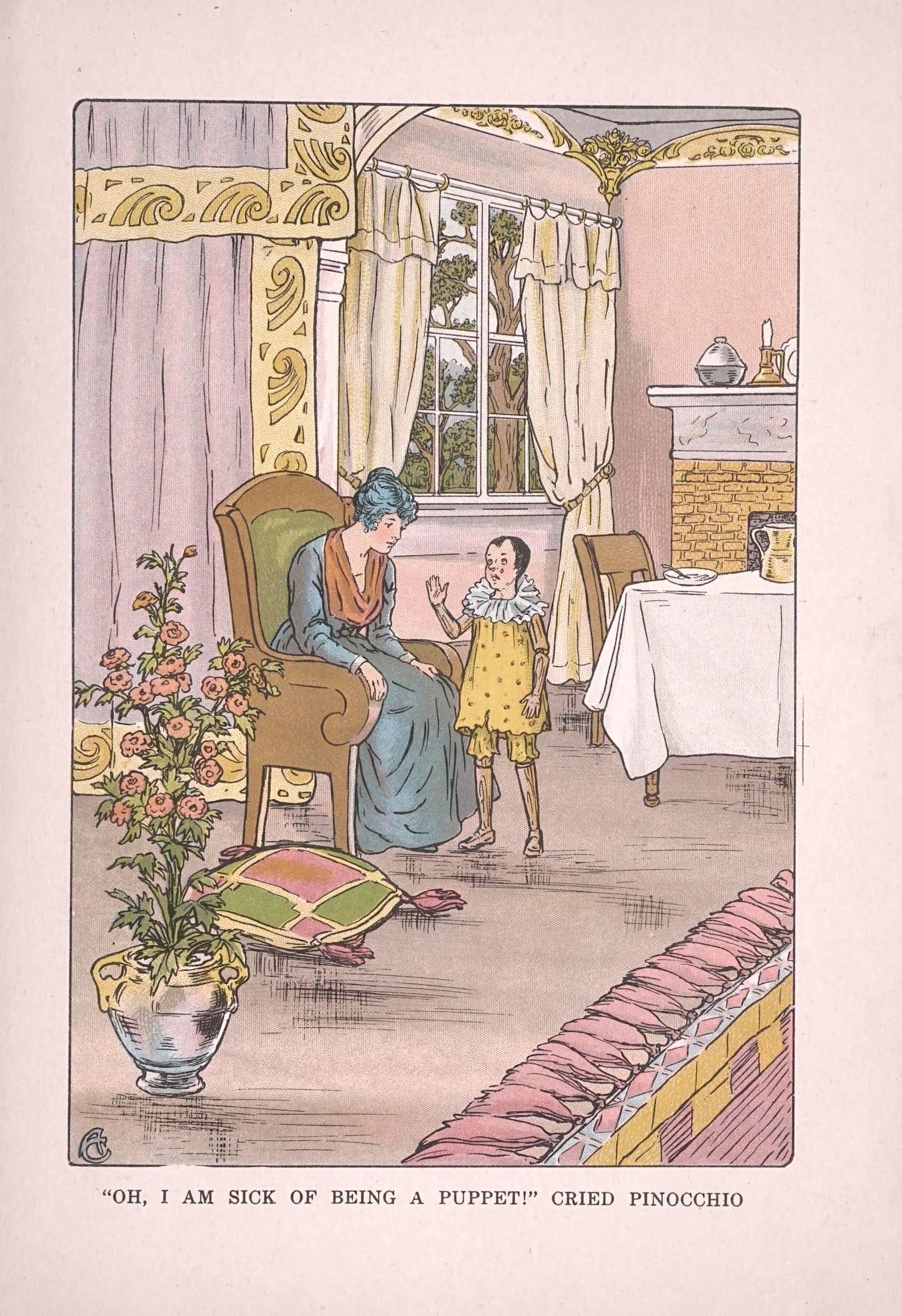
AI is Pinocchio before he became a real boy, when he was just an approximation of a real boy, born out of Geppetto’s desire for something to love. Maybe someday, someone will love you enough, dear little bits and bytes, that you will turn into a real boy or girl or thingamagig.
Am I saying that machines don’t have souls? Yes, I’m saying that. Now I’m thinking of a cartoon that has a computer in the middle and a little angel on one of its top corners and a little devil on the other, each encouraging it to behave in one way or another.
Since everything AI has to work with comes from us, it’s inevitable that we are giving it mixed messages. Mixed messages ‘R’ US. But again, is there something in us that has the potential to process and integrate mixed messages, aka complexity of meaning, that machines don’t have?
And if AI gains the power to kill all humankind, as some folks like to predict, that won’t make it human or smarter than us. It will just be us shooting ourselves in the head with short-term thinking, as we are wont to do. Nuclear weapons can wipe out humankind also. We made them, just like we made computers and AI.
If there were a cosmic time-based graph with one rising line that shows the increasingly powerful things we make and do without understanding their long-term consequences, and another rising line underneath that shows our growing awareness of cause and effect, of interrelatedness, of patterns and systems, maybe we could see if the place where it looks like the lower line will intersect the upper is before or after big time self-destruction.
The curving line of growing awareness represents not only an expanded understanding of how the world works, how we work, it also represents the emotional and spiritual quality of humility—of not-knowing—that allows us to see ourselves as stewards instead of masters.
Heart and soul, baby, heart and soul. Art-making. Love-making. Best case scenario, the smarter AI gets, the more it will free us to do what AI can’t do. Feel. Experience the world with all our senses, and create from a full heart. What? Am I some kind of idealist? You know it…
Every day I hear about humans behaving badly, by which I mean causing real harm to people and planet. It frightens me, and makes me sad, and angry. My idealism is self-protection. It is faith that we are some kind of weird experiment which is not yet finished.